
Titanium vs. Stainless Steel: Which Metal Fits Your Product Design?

Hey there! So, you’re curious about the battle of the metals, huh? Specifically, you’re wondering: “Which is better, stainless steel or titanium?” Well, you’re in the right place. Let’s dive into it!
Now, before we start, remember that both titanium and stainless steel are pretty awesome in their own ways. They’re like superheroes of the material world, each with their own special powers. But depending on what you need them for, one might be a better fit for your project.
Carbon Steel vs. Alloy Steel: Which Material Fits Your Product Design?
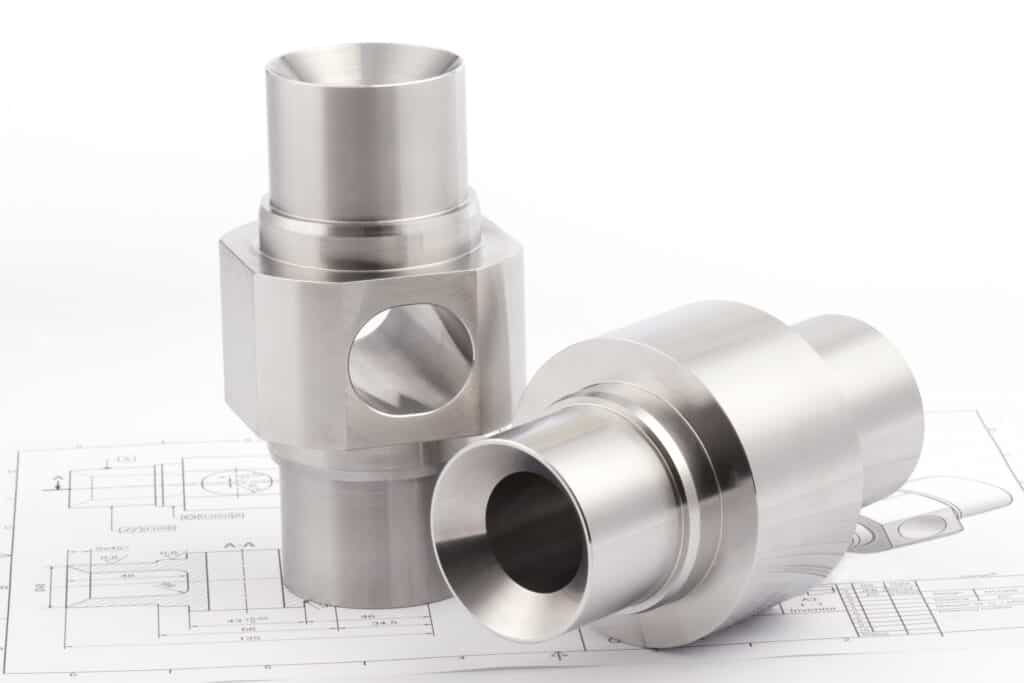
Alloy steel and carbon steel differ primarily in their composition. Iron and carbon make up carbon steel, usually with a carbon content that ranges from 0.05% to 2.5%. In contrast, alloy steel includes chromium, nickel, and manganese to alter their physical and mechanical characteristics. These elements can enhance attributes like strength, hardness, heat, or corrosion resistance, making alloy steel versatile for various applications.
Delrin vs. Nylon: A Comprehensive Comparison of Two High-Performance Plastic

In high-performance plastics, two names often stand out: Delrin and Nylon. These materials have exceptional mechanical properties and versatility, making them popular in different industries such as automotive and electronics. But when choosing between Delrin and Nylon, the decision can be challenging. Both materials offer unique advantages, and understanding their differences is crucial to making an informed choice.
How Material Hardness Affects Component Design?

Material hardness, a crucial property in materials science, defines a substance’s resistance to deformation. Understanding hardness is vital to many applications, from the diamond-tipped hammer to the softest material. Did you know that the hardness of diamond, the hardest natural material, is 1600 times greater than that of the softest one, talc? Let’s delve deeper into this fascinating topic.
What Tolerances Can CNC Hold on Acrylic Parts?

With its reliability and accuracy, CNC machining with acrylic can yield excellent results without worrying about human error. It’s also great for creating complex shapes with ease and precision. Whether you’re looking to produce a display piece or something more practical, CNC machining with acrylic will do the job!
How to Choose the Right Brass Alloy for CNC Machining Projects?

CNC machining in Brass provides a wide range of benefits for any application. Brass is an easy-to-machine material with excellent corrosion resistance and strength. CNC machining allows you to create intricate parts with the precision needed for today’s most advanced applications.

