

Choosing between plastic and metal gears isn’t just about material cost—it’s about understanding performance trade-offs that can make or break your design. With years of experience machining precision gears, we’ve seen how the right material choice dramatically impacts noise, wear rates, and long-term reliability.
Plastic gears work best in low-to-moderate torque applications (typically under 50 Nm) where noise reduction, corrosion resistance, or weight savings are critical. Materials like POM and PEEK can handle speeds up to 3,000 RPM with proper design, while offering self-lubricating properties metal gears can’t match.
Learn when plastic gears beat metal, which materials offer the best torque-to-weight ratios, and what design tweaks ensure reliable real-world performance.
Table of Contents
When can plastic gears safely replace metal gears?
Plastic gears can safely replace metal gears when the application operates within the material’s load, speed, temperature, and durability limits. The safest replacements are usually found in applications where noise reduction, weight reduction, corrosion resistance, or cost control matter more than maximum strength.
Many teams assume plastic is simply a cheaper version of metal. In practice, successful projects tend to treat plastic as a different engineering solution rather than a direct material substitution. The applications that succeed are often designed around the strengths of plastic from the beginning.
A common situation occurs when a prototype performs well, but concerns appear once production conditions are introduced. The gear ratio remains correct, yet the system becomes noisier, less precise, or less consistent than expected. In these cases, the issue is often not the ratio itself but the difference between prototype conditions and real operating conditions.
Experienced manufacturers usually focus on four questions before approving a plastic gear:
- Does the operating load stay within the material’s capability?
- Will temperature affect performance during normal use?
- Is long-term wear acceptable for the application’s service life?
- Can the system tolerate slightly different behavior than a metal gear?
Projects that answer “yes” to these questions are often good candidates for plastic gears. Projects that require maximum stiffness, extreme loads, high temperatures, or highly predictable long-term performance typically require a more cautious evaluation.
The decision is rarely about whether plastic is weaker than metal. The more useful question is whether the application actually needs the advantages that metal provides.

Why do plastic gears fail after working in prototypes?
Plastic gears often fail after successful prototype testing because production conditions expose loads, temperatures, runtime, and assembly variation that were not fully present during development.
Many teams interpret a successful prototype as proof that the material choice is correct. In practice, prototypes usually operate for shorter periods, under more controlled conditions, and with less manufacturing variation than production assemblies. The gear may perform perfectly during testing while still carrying hidden risk.
A common situation occurs when a plastic gear performs well during bench testing, but backlash increases, positioning becomes less consistent, or wear appears sooner than expected once the product enters regular use. The ratio remains correct, but the system no longer behaves the same way.
Experienced manufacturers usually investigate what changed between prototype conditions and production conditions before questioning the gear design. Load cycles, operating temperatures, support conditions, lubrication behavior, and assembly variation often explain the difference much faster than redesigning the gearing itself.
The most useful question is not whether the prototype worked. The more useful question is whether the prototype experienced the same conditions that production will face. Many plastic-gear failures originate from that gap rather than from the gear design itself.
When do plastic gears stop saving cost?
Plastic gears stop saving cost when the savings from material and manufacturing are outweighed by redesign effort, production instability, service issues, or shortened product life.
Many teams compare only the unit cost of the gear. Experienced manufacturers usually look at the cost of the entire system. A cheaper gear that creates assembly adjustments, warranty issues, excessive wear, or repeat design revisions often becomes more expensive than a higher-cost alternative.
We frequently see projects save money immediately after switching to plastic, only to lose those savings later through unexpected engineering effort. The original material cost reduction appears successful, but the project spends additional time managing performance variation, noise complaints, wear concerns, or product updates.
The strongest plastic-gear applications are usually those where the material’s advantages directly support the product requirements. The weakest are often projects that select plastic primarily because the part itself costs less.
The most valuable cost question is not “How much does the gear cost?” The more useful question is “What costs does this material choice create elsewhere in the project?” That answer often determines whether the savings are real.
Prototype Passed Testing. Will Production Behave the Same?
Plastic issues often appear only after real loads and temperature changes. Send your drawing, and we’ll flag production risks before they become costly.
Will plastic gears reduce noise without hurting positioning accuracy?
Plastic gears can reduce noise significantly, but whether positioning accuracy is affected depends on how sensitive the application is to material flexibility, backlash, and operating conditions.
Many teams move toward plastic because noise complaints are visible and easy to measure. The challenge is that the benefits appear immediately, while positioning issues often emerge later under load, temperature changes, or long-term wear.
A common pattern is that the gear train becomes quieter, but the system feels less precise during operation. In many applications, this tradeoff is completely acceptable. Consumer products, household devices, and low-load mechanisms often benefit from the reduced noise without meaningful performance loss. In positioning-sensitive applications, however, the same behavior may create new concerns.
Experienced manufacturers rarely evaluate noise and accuracy separately. We usually examine what consequence matters most to the product. If noise reduction creates no meaningful commercial risk, plastic may be an excellent choice. If positioning consistency is critical, the tradeoff deserves much closer review.
The decision is rarely about whether plastic is quieter. The more important question is how much positioning variation the application can tolerate while still meeting its performance requirements.
When do plastic gears become too risky for the application?
Plastic gears become too risky when the operating conditions begin demanding characteristics that the material cannot consistently deliver over the required product life.
Many teams focus on torque, speed, or temperature individually. Experienced manufacturers usually pay more attention to combinations of conditions. A plastic gear may handle moderate load, moderate temperature, and moderate runtime successfully on their own, yet struggle when all three occur together.
The warning signs often appear before failure occurs. Increasing wear, growing backlash, reduced positioning consistency, temperature sensitivity, or repeated field complaints frequently indicate that the material is approaching its practical limits.
We regularly see teams continue optimizing gear geometry when the material itself has become the limiting factor. Additional design effort may delay the problem, but it rarely removes it completely.
The key decision is not identifying the exact failure point. The more useful decision is recognizing when the application is moving close enough to the material’s limits that future reliability becomes difficult to predict. That is usually the point where alternative materials deserve serious consideration.
Not Sure If Plastic Is the Right Choice?
A successful prototype doesn’t guarantee long-term performance. Send your drawing, and we’ll identify hidden risks and safe design adjustments.
Why are suppliers recommending plastic instead of metal?
Suppliers usually recommend plastic when they believe the application can achieve the required performance while benefiting from lower cost, lower weight, quieter operation, or improved corrosion resistance.
Many buyers assume the recommendation is driven primarily by price. In reality, experienced manufacturers often consider several factors at once. Noise targets, assembly requirements, environmental exposure, manufacturing efficiency, and expected service conditions may all influence the recommendation.
Not every recommendation deserves automatic approval. We generally take the suggestion more seriously when multiple suppliers identify the same advantage or when the recommendation is tied to a clearly defined project objective. Recommendations deserve more scrutiny when the supplier cannot clearly explain what limitation of the current material is being solved.
A common mistake is focusing on the proposed material instead of the reason behind it. The material itself is rarely the decision. The real decision is whether the current material is creating a meaningful limitation for the project.
The most productive conversations usually begin with a simple question: “What problem does the plastic gear solve that the current design does not?” The quality of that answer often reveals whether the recommendation should be accepted, challenged, or investigated further.
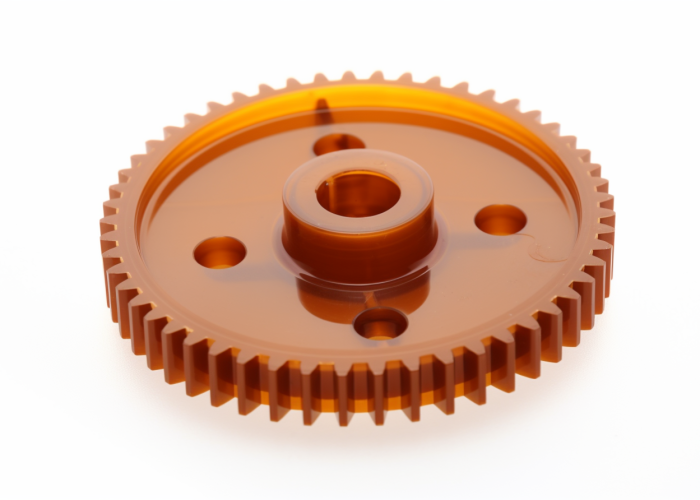
What Design Details Must Change When Switching to Plastic Gears?
When replacing metal gears with plastic, the key design details that usually require review are shaft support, backlash allowances, housing stiffness, operating clearances, and long-term wear assumptions.
In many projects, teams focus almost entirely on selecting the correct plastic material. The gear may fit the drawing perfectly, yet issues such as increased backlash, shifting alignment, or unexpected wear often appear once the part enters production. These problems generally originate from changes in the surrounding assembly rather than the material itself.
Experienced manufacturers review the entire system rather than the gear alone. Gear geometry, shaft support, bearing arrangements, lubrication strategy, operating temperature, and tolerance requirements all influence whether a plastic gear will perform reliably.
We regularly observe that the material performs correctly, but performance issues arise from overlooked support or alignment conditions in the assembly. When this happens, the gear often receives the blame, even though the underlying design or assembly factors are the real cause.
The most successful material transitions occur when the design is evaluated as a complete system. The critical question is not whether the gear itself fits the drawing, but whether the surrounding design supports consistent performance after the material change.
Considering Replacing Metal Gears with Plastic?
The wrong material change can solve one problem and create another. Share your design, and we’ll highlight likely risks and needed reviews.
When Should Plastic Gears Be Avoided in Product Design?
Plastic gears should generally be avoided when the application involves extreme loads, high operating temperatures, severe shock loading, precise positioning, or long service life with little tolerance for performance variation.
Prototypes may work under controlled conditions, but production assemblies can reveal gradual limitations. Backlash may increase, wear may accelerate, positioning consistency may degrade, and reliability may become harder to predict. These issues often appear long after initial testing.
Plastic is most likely to fail when operating near its material limits. Small changes in load, temperature, wear, assembly alignment, or lubrication can have a disproportionate effect on long-term performance.
Experienced manufacturers become cautious when product performance depends on a plastic gear operating close to its limits for extended periods. The focus is on understanding whether the gear can maintain reliable operation across all expected conditions, not simply whether it works initially.
The safest decision is rarely “always plastic” or “always metal.” It is selecting the material that delivers the required performance with an acceptable level of risk throughout the product’s expected life.
Conclusion
Plastic gears can reduce cost, weight, and noise, but only when the application matches the material’s real operating limits. Most failures occur when prototype results, operating conditions, or long-term performance requirements are misunderstood. If you’re considering replacing metal with plastic, send us your drawing or application details. We’ll help identify whether plastic is a safe choice, what risks to expect, and whether design changes are needed before production.
Frequently Asked Questioins
Always specify material based on your application requirements. Manufacturers may default to lowest-cost options without understanding your performance criteria. Provide operating temperature, load cycles, accuracy requirements, and environment conditions for proper material selection.
Multiply potential failure cost (redesign + delays + retesting) by failure probability. If this exceeds 10x the metal gear premium, choose metal. For medical devices or safety systems, failure probability approaches 100% due to validation requirements, making metal mandatory regardless of load calculations.
Only if load, speed, and temperature requirements remain identical. Plastic and metal gears have different backlash, stiffness, and thermal expansion properties that affect overall system performance. Design validation with plastic may not predict metal gear behavior accurately.
Request sample parts with dimensional reports showing CMM measurements. Verify they have climate-controlled machining and appropriate inspection equipment. Gear grinding capabilities indicate precision manufacturing experience beyond basic CNC machining.
Injection-molded plastic gears require 2-4 weeks for tooling plus molding time. CNC-machined metal gears typically deliver in 5-10 days from approved drawings. For urgent prototypes, machined gears often arrive faster despite higher material costs.