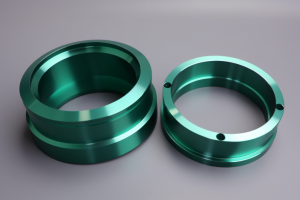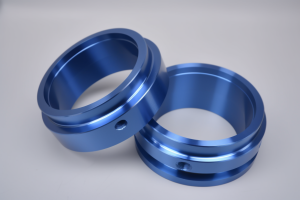


You receive the hard-anodized parts, open the package, and discover visible cracks that were never reported during production or final inspection.
Hard-anodized parts can crack for several technical reasons, but shipping cracked parts is often a business or quality decision rather than a technical one. When visible defects still reach the customer, the larger concern is usually not how the crack formed, but why the supplier allowed it to leave the factory.
The immediate question is not only whether the parts can still be used, but whether replacement parts will fail again and whether the supplier can still be trusted. Understanding where the failure occurred is the first step toward deciding whether to keep the specification—or change the supplier.
Table of Contents
What Does It Mean If the Supplier Shipped the Parts Anyway?
If a supplier knowingly shipped visibly cracked hard-anodized parts, it often means the supplier chose delivery commitments, cost, or capacity constraints over shipping fully conforming parts. In effect, the supplier transferred production risk from the factory floor to the customer’s schedule.
Suppliers rarely ship obvious defects unless remanufacturing would create larger internal problems such as missed deadlines, low yield, overloaded capacity, or expensive scrap. From the supplier’s perspective, shipping the parts may preserve delivery dates. From the buyer’s perspective, the delay, sorting, replacement, and customer impact are simply moved downstream.
For buyers, the larger concern is not only the cracked parts already received but whether the same conditions still exist inside the factory. If replacement parts are produced using the same material, fixturing, machining route, and anodizing process, the same failure can occur again.
Visible defects also raise broader quality concerns. Cracks are relatively easy for customers to detect. If a supplier is willing to ship visible defects, buyers naturally begin asking whether less visible issues—such as coating thickness variation, dimensional drift, or process deviations—could also escape control.
Before approving replacement parts, ask the supplier to identify the specific root cause and explain what process has changed to prevent recurrence. Corrective actions that add inspection without changing material selection, machining practices, fixturing, or anodizing conditions often improve defect detection rather than eliminate the failure itself.
Why Did Hard-Anodized Parts Crack After Processing?
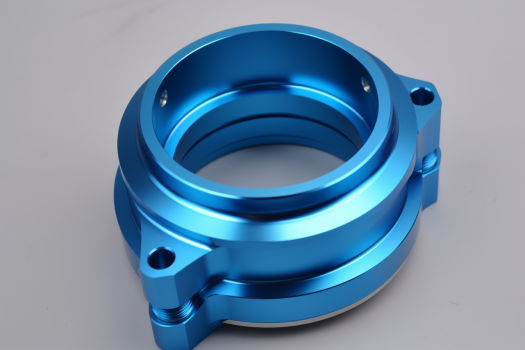
Hard-anodized parts usually crack because the anodizing step exposed stress, geometry weakness, material risk, or machining damage that already existed before finishing. But if cracked parts were still shipped, the more important concern is whether the supplier understood those risks before release.
Hard anodizing creates a hard oxide layer on the aluminum surface. If the part already contains sharp transitions, thin walls, residual machining stress, unsuitable alloy conditions, or stress concentration around holes and corners, the anodizing process can reveal weaknesses that were not obvious after machining.
The crack may appear after anodizing, but the root cause may come from earlier decisions: material choice, heat treatment, machining sequence, deburring, edge condition, fixturing, or outsourced anodizing control. That is why focusing only on the anodizing supplier can miss the real failure path.
For the buyer, the practical issue is not only “why did it crack?” but “can the supplier identify where the weakness entered the process?” If the supplier gives only a general answer such as “anodizing caused it,” that may not be enough to prevent repeat failure.
A useful response should identify the crack location, likely stress source, process step involved, and specific change before the next batch. If the supplier cannot connect the defect to a controllable cause, the replacement risk remains high even if they promise to remake the parts.
Cracked Parts Arrived. What Should You Do Next?
Determine whether the failure came from the process, supplier control, or the specification before remaking parts.
What a Cracked Hard-Anodized Part Says About Supplier Control?
Cracked hard-anodized parts do not automatically indicate poor manufacturing because surface treatment failures occur in every factory. What matters is whether the supplier identified the problem, informed the customer, and aligned on recovery before shipment.
Hard anodizing is typically performed near the end of production, after material, machining, and finishing costs have already been invested. When cracks are discovered at this stage, remanufacturing often means additional lead time, scrap cost, and production disruption. An experienced supplier should communicate the issue immediately and allow the customer to decide whether to wait for replacement parts or discuss other options.
The real concern begins when defective parts reach the customer without prior notice. At that point, the supplier has not only shipped nonconforming parts but also removed the customer’s ability to make an informed schedule decision. Many buyers can accept delays; far fewer can accept surprises after the parts arrive.
Supplier control is therefore not measured by whether defects occur, but by how defects are contained and communicated. Strong suppliers stop shipment, investigate root cause, explain the impact on delivery, and provide a recovery plan before the customer discovers the problem.
Ask when the defect was discovered, who approved shipment, and whether replacement production had already been evaluated before shipping. If the supplier cannot explain why shipment was released despite visible defects, the issue may extend beyond this batch and into broader quality-system reliability.
Can Cracked Hard-Anodized Parts Still Be Used?
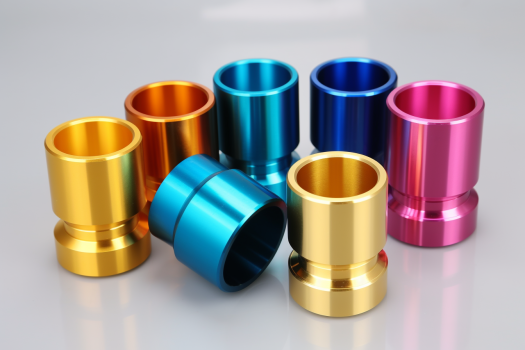
Cracked hard-anodized parts should generally be removed from normal production flow because the cost of field failure is often much greater than the cost of replacement. The immediate priority is usually protecting assembly schedules and downstream quality rather than trying to salvage questionable parts.
The first step is to quarantine the shipment and identify where the cracks are located. Cracks on cosmetic surfaces may carry different risks than cracks near threaded holes, sealing areas, wear surfaces, sharp transitions, or load-bearing features. The same crack size can have very different consequences depending on the function of the affected area.
When lead time is already disrupted, some companies may choose temporary use under engineering deviation or limited application while waiting for replacements. However, this is fundamentally a schedule-management decision rather than a quality approval. A part that functions today may still create wear, leakage, corrosion, or reliability problems later.
The practical question is not whether the crack looks small but what happens if the part fails after assembly or customer shipment. The later a failure occurs, the more expensive it becomes to correct.
Unless the application risk is clearly understood and formally accepted, rejection or replacement is usually the safer manufacturing decision. Protecting production continuity is important, but transferring uncertain risk into downstream operations often creates larger problems later.
Can Your Supplier Prevent the Next Failure?
A replacement batch only works if the process changes—not just the inspection.
Can the Current Supplier Prevent the Same Failure on Replacement Parts?
The current supplier can prevent repeat failure only if they identify the real cause and change the process that created it. Remaking the same parts with the same material, machining route, fixturing, and anodizing controls may simply reproduce the same cracks.
A replacement promise is not the same as corrective action. Many suppliers respond to defects by adding inspection, but inspection only improves detection after the defect exists. It does not remove residual stress, sharp transitions, unsuitable processing conditions, or poor anodizing control.
The key question is whether the supplier has changed something that actually affects the failure mechanism. Stronger corrective actions may include changing machining sequence, improving edge radii, adjusting fixturing, reviewing alloy or heat treatment condition, modifying anodizing parameters, or improving subcontractor control.
For the buyer, this matters because a second failed batch can damage more than the order. It can delay assembly, consume incoming inspection time, create customer delivery problems, and force emergency sourcing under pressure.
Before trusting the same supplier with replacements, request a specific root cause, before-and-after process changes, and evidence from trial parts or first replacement samples. If the supplier only promises “we will inspect more carefully next time,” the recurrence risk is still not controlled.
Are You Paying for Hard-Anodizing Without Real Quality Verification?
Yes. If cracked hard-anodized parts reached your facility, then the existing quality verification failed to prevent defective parts from shipping. The issue is not whether inspection occurred, but whether the inspection was effective enough to stop nonconforming parts from leaving the factory.
Many buyers assume that hard anodizing automatically includes thorough quality control. In practice, hard anodizing and quality verification are often treated as separate activities. A supplier may complete the anodizing process successfully while still lacking effective release controls for the finished parts.
The more important question is which verification step failed. Were the cracks created after anodizing but before packing? Were they detected but released anyway? Was there a final visual inspection after surface treatment? Did anyone have authority to stop shipment and notify the customer about the delay? These questions often reveal more than the defect itself.
For international shipments, a missed defect creates more than a quality problem—it consumes weeks of lead time before the customer even discovers the issue. Once the parts arrive and defects are found, schedule recovery becomes significantly more difficult.
Future orders should define post-anodizing inspection requirements, shipment-release criteria, and communication procedures for nonconforming parts. For critical components, requesting finished-part photos or inspection reports before shipment can prevent defective parts from consuming valuable production time.
Change the Supplier or Change the Drawing?
Determine whether the crack was caused by supplier execution or design limitations.
Can a New Supplier Actually Save Your Timeline After Hard-Anodizing Failure?
Sometimes. A new supplier can recover lost time only if they first identify the original failure mechanism rather than simply remaking the same parts faster.
When cracked parts arrive, buyers often lose both parts and lead time at the same time. Transferring production to another supplier may shorten recovery if the new supplier can quickly review the drawing, crack location, material condition, and manufacturing process before restarting production.
However, changing suppliers does not automatically remove the root cause. If the same geometry, alloy, machining route, and anodizing conditions are repeated, the same crack may reappear under a different supplier name.
The advantage of a new supplier is often a fresh review rather than additional capacity. A second manufacturer may identify stress concentration, fixturing issues, machining sequence problems, or finishing risks that were never challenged previously.
When recovering schedule, ask the new supplier to review the failed parts—not only the drawing. A supplier that investigates the failure before quoting replacement parts is often more likely to prevent another delay than one that immediately starts production.
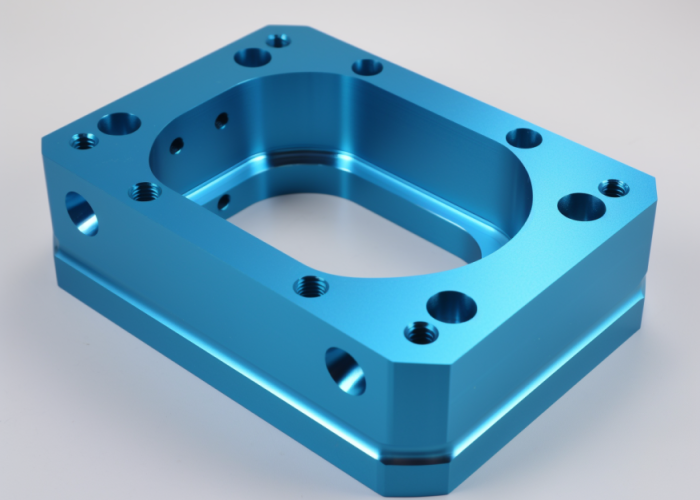
Should You Change the Spec — or Change the Supplier?
In most cases, change the supplier before changing a proven specification. A cracked hard-anodized shipment does not automatically mean the drawing is wrong, especially if the design has worked previously or similar parts have been produced successfully elsewhere.
When hard-anodized parts fail, suppliers sometimes recommend changing the specification by reducing coating thickness, relaxing surface requirements, changing material, or replacing hard anodizing with another finish. In some situations these changes are reasonable. In others, changing the drawing is easier and faster than improving process capability or absorbing remanufacturing costs.
The risk is that a supplier problem can gradually become a design problem. A specification changed under schedule pressure may reduce wear resistance, corrosion performance, or product life long after the original manufacturing issue has disappeared. Requalification, testing, customer approval, and documentation updates may also create additional cost and delay.
A practical rule is to investigate the supplier first when the design has worked historically, when failures appear only at one supplier, or when the supplier cannot identify a clear root cause. Review the specification when multiple capable suppliers independently report the same limitation or when application requirements allow alternative solutions.
Proven drawings are usually changed last, not first. Seeking a second manufacturing opinion before changing the specification often costs less than redesigning a product around one supplier’s manufacturing limitations.
Conclusion
Cracked hard-anodized parts are more than a surface-treatment issue—they are often a test of supplier control, communication, and recovery capability. The key decision is not only why the parts cracked, but whether the same failure can happen again. Before changing drawings or accepting replacements, understand where the process failed and how future risk will be prevented. If you need a second manufacturing opinion on failed parts, drawings, or replacement plans, feel free to contact us.
Frequently Asked Questions
We prioritize recovery quoting. When drawings and finish specs arrive, an engineer—not a salesperson—reviews them the same day. You’ll receive a verified manufacturability check and quote within 24 hours, including coating lead time and achievable tolerances. No waiting for “availability updates”—you get a clear production slot immediately.
No. Once your drawings and specs are confirmed, production slots open within 24 hours. For common alloys, most precision parts ship in 5–7 working days. Because machining and finishing stay under one roof, there’s no third-party bottleneck or rescheduling lag.
Upload your CAD and PDF files for a free tolerance-fit review. Our engineers run DFM analysis within 24 hours, highlighting dimensions that drive machining cost or coating risk. You’ll know exactly what’s manufacturable and what caused quoting hesitation earlier.
We handle machining, surface prep, and anodizing entirely in-house. Each batch logs bath temperature, coating thickness, and hardness. That data stays traceable to your PO, giving you verified coating performance before shipment and removing the subcontract-chain uncertainty that caused your last failure.
Okdor’s pricing is based on measured process capability, not estimates. After material and tolerance validation, your quote stays fixed — no hidden “complexity” fees later. Every quote includes DFM notes so you can see exactly what affects cost and make informed sourcing decisions.